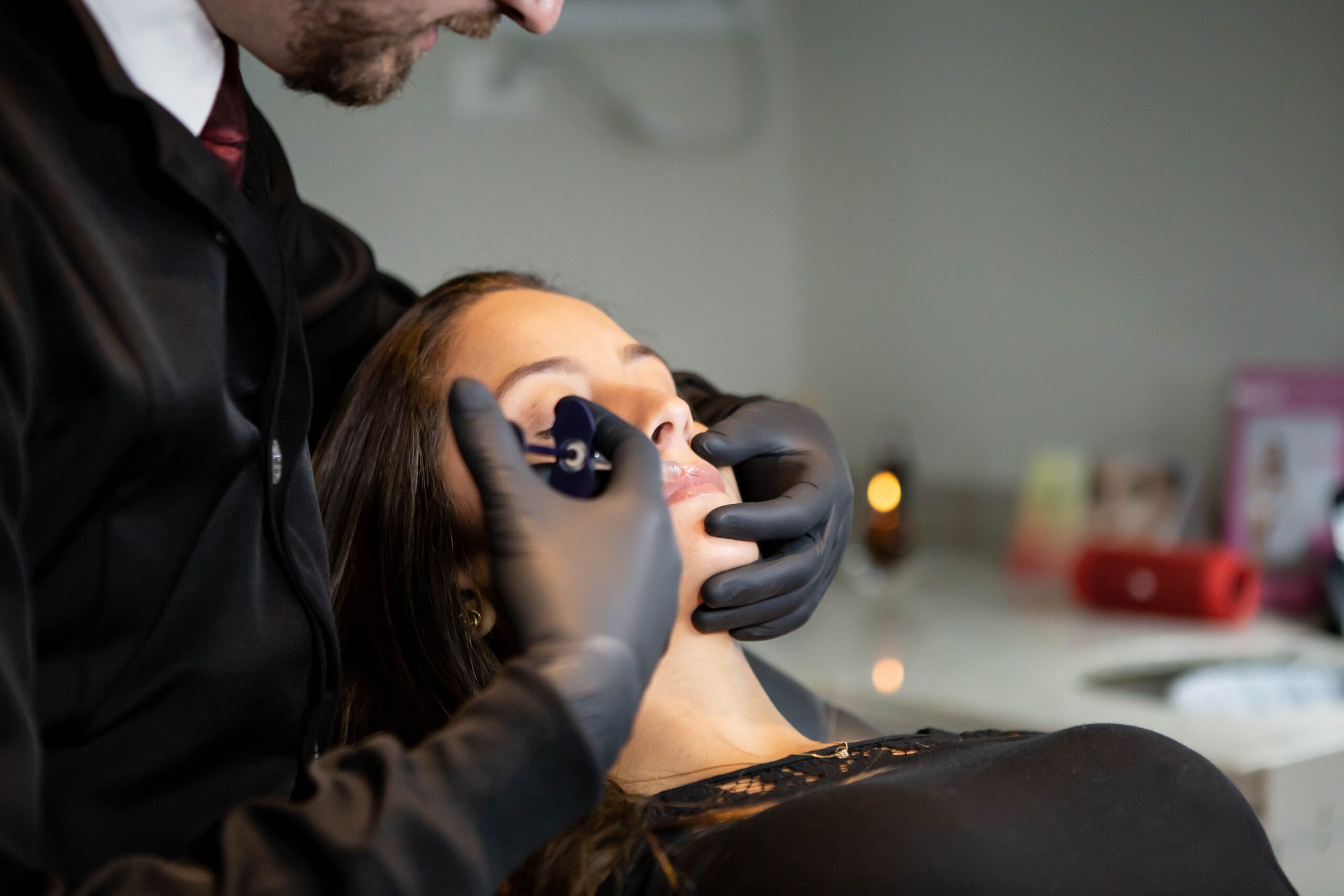
To verify whether an aesthetics or laser training school in Texas is legitimately licensed, you must perform a dual-agency verification: confirm institutional accreditation with the Texas Workforce Commission (TWC) under the Texas Education Code, and verify operational program compliance or Certifying Entity standing with the Texas Department of Licensing and Regulation (TDLR). Legitimate institutions maintain verifiable public registration numbers, state surety bonding, TDLR-registered clinical facilities, and faculty approved by state regulatory bodies.
The medical aesthetics and aesthetic laser industry across Texas is experiencing historic growth. With medical spas, cosmetic dermatology practices, and wellness clinics opening across the Dallas–Fort Worth metroplex, the demand for certified technicians and advanced skin clinicians has never been higher. However, rapid industry expansion has also brought a rise in unaccredited weekend workshops, unapproved internet seminars, and informal private trainings that operate outside the law.
Enrolling in an illegitimate training program carries severe risks. Students often spend thousands of dollars in non-refundable tuition only to find that TDLR rejects their course certificates, making them ineligible for state practitioner licenses. Knowing how to independently audit and verify a school’s legal credentials before paying tuition is the single most important step you can take. At Empower Health & Aesthetics Institute, regulatory compliance and educational transparency form the cornerstone of our institution, ensuring every student earns defensible credentials recognized across the state.
Understanding Texas Aesthetics Regulation: The Dual-Agency Framework
In Texas, checking whether an aesthetic or laser academy is legitimately credentialed requires understanding that two separate state agencies govern occupational education and clinical practice. Legitimate career institutions must satisfy requirements established by both bodies:
- The Texas Workforce Commission (TWC): Regulates private postsecondary career schools and colleges under Texas Education Code Chapter 132. The TWC evaluates school financial stability, surety bonds, instructor qualifications, facilities, grading standards, and student consumer refund protections. Any institution charging tuition to teach vocational skills in Texas must hold an active Certificate of Approval from the TWC.
- The Texas Department of Licensing and Regulation (TDLR): Regulates individual practitioners, laser certifying entities, and clinical laser facilities under 16 Texas Administrative Code Chapter 118 and Texas Health and Safety Code Chapter 401. TDLR oversees the safety rules, registers facility treatment rooms, and administers the state’s four-tier laser licensing ladder through the TDLR Public License Verification Portal.
An aesthetic school cannot legally substitute an equipment manufacturer workshop or a generic business LLC filing for state educational approval. Legitimacy requires active compliance under both agencies.
| Regulatory Governing Body | What the Agency Audits | What It Means for the Student |
|---|---|---|
| Texas Workforce Commission (TWC) | Institutional licensure, curriculum clock hours, instructor credentials, financial surety bonding, and student enrollment agreements. | Guarantees the school is legally authorized to teach vocational courses and your tuition is protected under state refund statutes. |
| Texas Department of Licensing & Regulation (TDLR) | Laser hair removal program compliance, approved Certifying Entities, facility clinical registrations, and consulting physician protocols. | Guarantees that your certificates of completion and clinical treatment logs will be accepted for state practitioner licenses. |
Step-by-Step Guide: How to Verify an Aesthetics School in Texas
Before submitting a deposit or signing an enrollment contract, conduct this independent five-step audit to confirm that the institution is fully licensed and recognized by the State of Texas:
Step 1: Check the Texas Workforce Commission (TWC) Directory
Visit the official TWC Career Schools and Colleges database. Search for the institution’s legal corporate name or facility DBA. A legitimate vocational school will have an assigned TWC School Number and an active Certificate of Approval. If an institution claims it does not need TWC approval because it “only offers short certificates” or “only trains licensed professionals,” exercise extreme caution: Texas law strictly limits exemptions, and most vocational training institutions must be licensed.
Step 2: Confirm TDLR Certifying Entity and Program Approval
For laser hair removal education, verify that the training provider is recognized by TDLR to deliver the state-mandated curriculum. Texas requires specific approval for schools administering the 40-hour didactic curriculum, as well as formal Certifying Entity status for institutions proctoring the state exam for the top operational tier. Look up the school on the TDLR public search system to ensure their program status is active and in good standing.
Step 3: Verify the School’s Clinical Facility Registration
Hands-on clinical training cannot legally take place in an ordinary classroom, salon suite, or hotel conference room. In Texas, any facility where cosmetic Class IIIb or Class IV lasers or Intense Pulsed Light (IPL) systems are operated must hold an active Laser Hair Removal Facility Registration with TDLR. This certificate must be conspicuously posted on-site and linked to an authorized Consulting Physician and designated Laser Safety Officer (LSO).
Step 4: Audit Instructor Credentials and State Approvals
Ask the institution for the professional credentials of the instructors who will be leading your courses. In a TWC-accredited career school, every instructor must submit formal applications and undergo state vetting. For laser programs, practical clinical supervisors must hold active Senior Laser Hair Removal Technician or Laser Hair Removal Professional credentials issued by TDLR, or be licensed medical healthcare providers.
Step 5: Review the Standardized Student Enrollment Agreement
Legitimate career schools are required by state statute to provide a comprehensive, multi-page Enrollment Agreement prior to collecting tuition. This document must clearly outline the total course cost, program clock hours, grading scales, grievance procedures, and the state-mandated TWC tuition refund schedule. If a training provider asks for payment via cash or peer-to-peer mobile apps without executing a formal state enrollment agreement, they are not operating in compliance with Texas law.
| Verification Checkpoint | Legitimate, State-Approved School | Unaccredited / Non-Compliant Program |
|---|---|---|
| TWC Certificate of Approval | Active school registration number displayed and verifiable via state records. | No state file number; claims to be exempt or operates under a standard business LLC only. |
| TDLR Recognition | Program curriculum accepted directly for state licensing applications. | Certificates rejected by TDLR; students forced to retake hours elsewhere. |
| Clinical Treatment Suites | Registered TDLR facility with designated physician protocols and LSO oversight. | Conducted in hotel meeting rooms, temporary rentals, or unregistered salon suites. |
| Tuition Documentation | Formal TWC enrollment agreement with transparent, binding refund schedule. | Informal invoices with “all sales final / no refund” disclaimers violating Texas codes. |
| Treatment Log Audits | Signed by licensed Senior Technicians or Professionals on compliant state forms. | Generic certificates with no verifiable patient logs or supervisor license numbers. |
Common Red Flags When Researching Texas Aesthetics Schools
Prospective students should watch for several warning signs that indicate a training program may lack proper accreditation or state standing:
- Guaranteed “Instant Licensing” Without Clinical Hours: Any school claiming you can become a fully independent laser operator in Texas after a single weekend without completing 100 logged, supervised treatments is misrepresenting state law.
- Training in Unregistered Spaces: Texas law strictly prohibits firing Class IIIb or IV lasers outside a registered facility. If clinical practice takes place in temporary conference rooms without proper Nominal Hazard Zone (NHZ) controls and wavelength-specific eyewear, the operation is unlawful.
- Hidden Course Supply Fees: Non-compliant programs often lure students with low advertised tuition, only to require mandatory purchases of $1,000+ supply kits or charge extra fees to access live patient models.
- Absence of Permanent Transcripts: Unaccredited workshops often vanish or fail to archive student records, leaving graduates unable to prove their clock hours when applying for license renewals or out-of-state transfers years later.
Why Institutional Accreditation Matters for Your Career
Choosing an accredited career school is not merely about staying compliant on paper—it directly determines your employability and professional longevity in the medical aesthetics space.
Employers, medical directors, and medspa liability insurance carriers routinely audit new hires. When a clinic applies to add you to their malpractice policy, the insurer requires proof of education from an approved, accredited institution. Graduating from an accredited school provides instant credibility, verifying that you have completed structured training in selective photothermolysis, Fitzpatrick skin typing, complication mitigation, and ANSI Z136.3 safety protocols.
To examine how state credentials align with professional roles, explore our comprehensive breakdown on how the four TDLR certification levels differ.
Comprehensive Aesthetic Pathways at Empower Health & Aesthetics Institute
Empower Health & Aesthetics Institute holds institutional accreditation from the Texas Workforce Commission (TWC), providing full confidence that our academic courses, clinical facilities, and faculty credentials satisfy the highest statutory benchmarks in Texas.
Our curriculum is structured to support every phase of your aesthetic career:
1. Foundational Didactic Instruction
Students begin with our Level 1: Laser Hair Removal Apprentice Didactic course. This 40-hour state-mandated curriculum covers laser physics, tissue interactions, melanin absorption, ocular safety, and consultation ethics, qualifying graduates for their initial TDLR Apprentice-in-Training certificate.
2. Hands-On Clinical Practicum
To reach independent technician status, students enroll in our Level 2 Clinical Practicum program. Empower provides live client models in fully registered medical spa treatment suites. Under the direct supervision of certified Senior Technicians and Laser Professionals, students complete and log their mandatory 100 clinical treatments on commercial multi-wavelength platforms.
3. Advanced Supervisory & Exam Certifications
Working technicians advance into clinical leadership through our 8-hour Level 3: Senior Laser Hair Removal Technician Course, which grants supervisory authority over junior staff. To reach top-tier status, candidates attend the Level 4: Professional Exam Course. As an official TDLR-approved Certifying Entity, Empower proctors the state examination directly on campus.
Students also benefit from our multidisciplinary training options. You can pair your laser credentials with certifications in advanced medical spa clinical skin therapies—such as chemical peels, microneedling, and IPL photofacials—or enroll in our specialized medical aesthetics injectable training for licensed healthcare professionals.
To review our full schedule and transparent tuition structures, explore our courses and pricing catalog, or read our detailed guide on the cost of laser hair removal certification in Texas.
Checklist: Questions to Ask Admissions Before Enrolling
When speaking with admissions representatives at any Texas aesthetics school, ask these five direct questions to confirm their operational standing:
- “What is your school’s official Texas Workforce Commission (TWC) school approval number?”
- “Is your facility officially registered with TDLR to administer Class IIIb and IV cosmetic lasers?”
- “Are your 100 clinical practicum treatments performed on live patient models provided by the school?”
- “Are your supervising instructors state-registered Senior Technicians, Laser Professionals, or licensed medical providers?”
- “Do you provide a formal TWC student enrollment agreement detailing the state refund policy before tuition is collected?”
An accredited, legitimate institution will answer each of these questions immediately and provide verifiable documentation upon request.
Begin Your Accredited Aesthetic Training at Empower
Your educational credentials define your career path in medical aesthetics. Enrolling in a legitimately accredited, state-approved school ensures your investment is secure, your training meets the highest clinical standards, and your licenses are fully recognized across the medical spa industry. Empower Health & Aesthetics Institute provides modern campuses in Dallas and Fort Worth featuring multi-wavelength laser technology, live patient models, and experienced faculty dedicated to your professional success. Visit our admissions and tour page to explore upcoming start dates, view campus schedules, or schedule an in-person facility visit. When you are ready to take the first step toward a thriving, legally protected career in aesthetics, connect directly with Empower Health & Aesthetics Institute or call our admissions team today at 214-272-0026.